HVAC · the USA
Technicians follow a written sequence that covers load evaluation, AC installation, installation, and verification. Each step is documented so the property owner can review what was checked and what was installed.
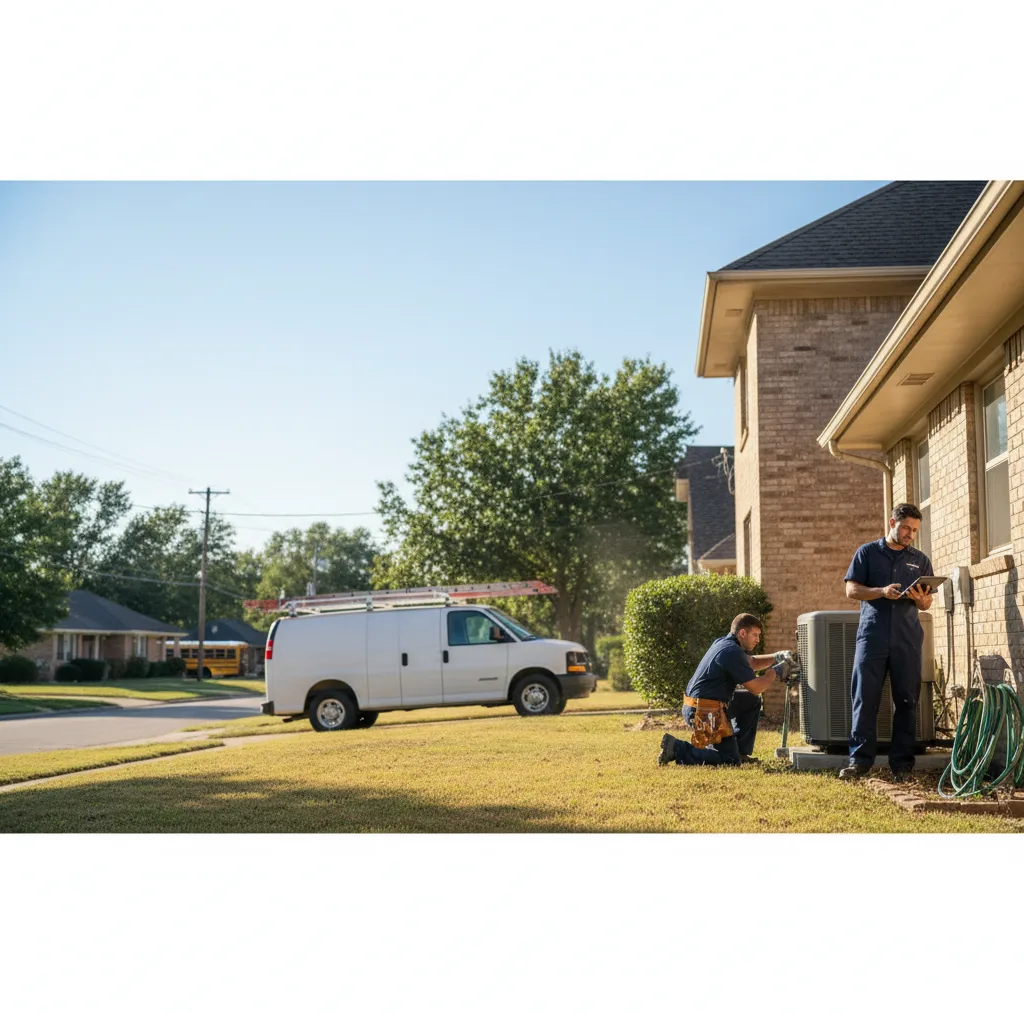
Rising energy bills often trace back to declining compressor or heat exchanger performance rather than changes in usage. Homeowners may also notice rooms that never reach the thermostat setting or hear short cycling that points to an oversized or aging unit. When AC repair frequency increases and parts become harder to source, replacement usually costs less over time than repeated service calls. A technician measures airflow, checks duct leakage, and reviews the age and SEER rating of the current equipment before recommending a full swap. These measurements give a clear picture of whether the system can still meet the load or whether continuing repairs will only delay the inevitable.
Removal begins with safe recovery of refrigerant and disconnection of electrical and gas lines. The old indoor and outdoor sections are taken out, followed by inspection of the existing plenum and line set for reuse. New equipment is set on level pads or platforms, connected with properly sized copper tubing, and integrated with updated thermostat installation or zoning controls. Final steps include evacuation, charging to factory specifications, and a full operational test across all modes.
FAQ

Warm supply air usually means the refrigerant charge is low or the evaporator coil is restricted. A technician measures the temperature split across the coil and checks system pressures to determine which condition exists. Simply adding refrigerant without repairing the leak will not produce lasting results.
The capacitor stores a charge even after power is removed, so discharge procedures and proper sizing are required. Incorrect replacement can damage the compressor or create a safety hazard. Most manufacturers require licensed personnel for warranty compliance.
A failed compressor often shows zero pressure differential between suction and discharge lines and draws locked-rotor amperage. Technicians also listen for internal knocking and check winding resistance. Replacement cost is compared against the remaining life of the rest of the system before any decision is made.